
Virtual Office for GST Registration in Mohali (2026): Documents, Process & Mistakes to Avoid
A practical 2026 guide to using a virtual office for GST registration in Mohali, including documents, application steps, verification and common mistakes.
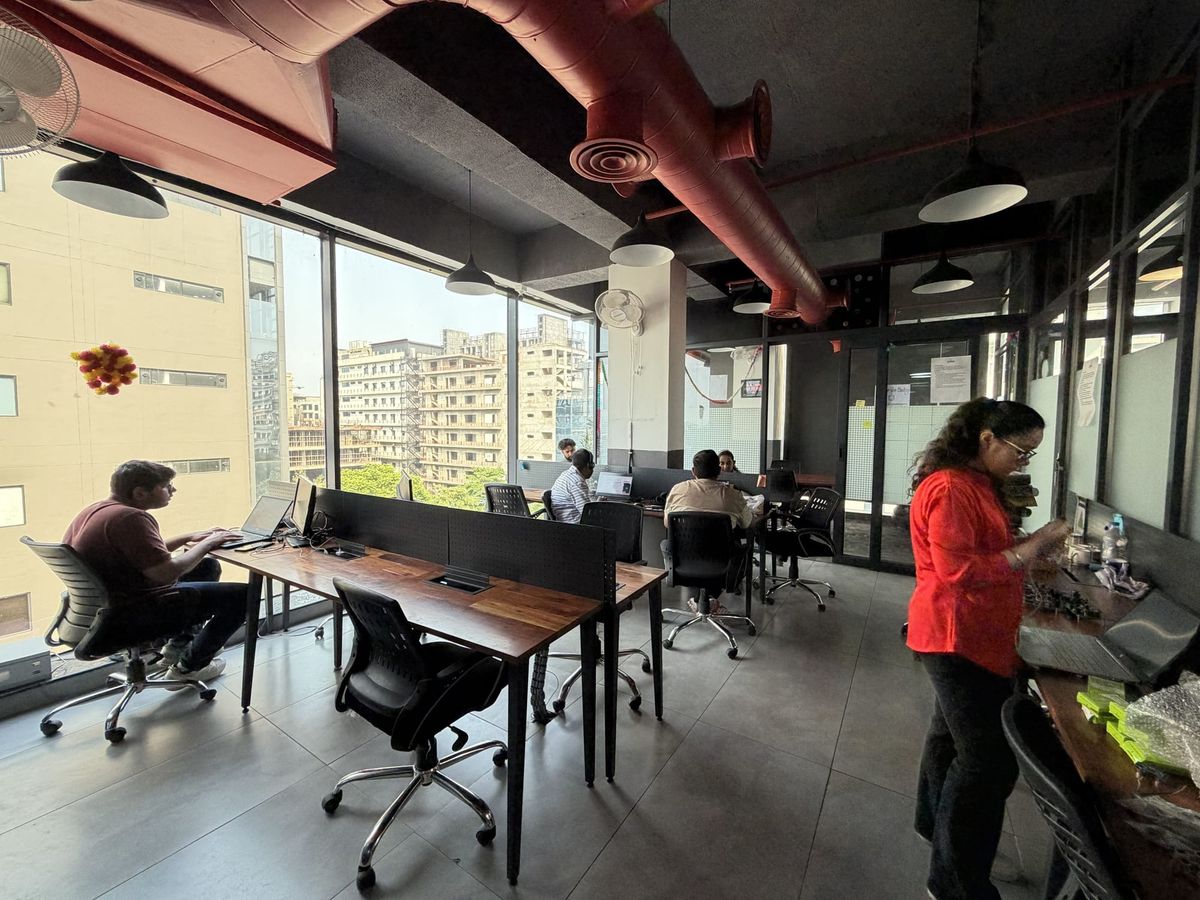
A practical guide for startups, consultants, online businesses and remote companies planning to use a virtual office address for GST registration in Mohali.
Renting a complete physical office only to obtain a business address does not make sense for every company.
A consultant working remotely, an online seller, a software company with a distributed team or a startup entering Punjab may need a genuine business address in Mohali without needing ten desks and a full-time office from day one.
This is where a virtual office can be useful. But GST registration is not simply about purchasing an address and uploading it in an application. The address, agreement, ownership documents and information entered on the GST portal must match properly.
The cheapest address is not necessarily the safest option. A genuine workspace with clear documentation, mail handling and a team that understands verification requirements is usually more important than saving a small amount on the plan.

QUICK ANSWER
Can a virtual office be used for GST registration in Mohali?
Shared or rented business premises can be used for GST registration when the applicant has valid documents supporting the right to use the address.
Depending on the arrangement, these documents may include a rent or lease agreement, consent letter, proof of ownership such as an electricity bill or property-tax document, and the applicant’s business and KYC documents.
GST registration is always subject to the accuracy of the application, document scrutiny and any verification required by the GST authorities. No workspace provider or consultant should promise guaranteed approval.
What does a virtual office actually provide?
A virtual office gives a business access to a professional address without requiring the company to maintain a full-time physical office for its entire team.
Depending on the plan, the address may be used for business correspondence, company registration, GST registration, mail handling and other permitted business purposes.
Some virtual office plans may also include optional access to meeting rooms, coworking desks, reception services or private cabins when the business needs to meet clients or work from the location.
The exact services and documentation vary between providers and plans. Before paying, ask specifically what is included and what is not.
Who normally uses a virtual office in Mohali?
Virtual offices are commonly considered by businesses that need a professional address but do not require a permanent office for daily use.
Typical users include:
- Consultants and independent professionals
- Online sellers and ecommerce businesses
- Software and technology companies with remote teams
- Digital marketing and professional-service businesses
- Startups registering a new company
- Businesses opening a branch or presence in Punjab
- Companies whose founders work from home
- Businesses that mainly need mail handling and a credible address
A virtual office is less suitable when a company has employees working from the location every day, stores inventory there, receives frequent customers or needs permanent operational space.
In those situations, a dedicated desk, private cabin or managed office may be more appropriate.
What documents are normally required?
There are two sides to the documentation: documents relating to the business applying for GST and documents relating to the proposed principal place of business.
Your chartered accountant or GST professional should confirm the final list for your particular business constitution and application.
Documents generally required from the applicant
- PAN of the business or applicant, as applicable
- Aadhaar and PAN of promoters, partners or directors
- Certificate of incorporation for a company
- Partnership deed for a partnership firm
- Photograph of the authorised signatory
- Letter of authorisation or board authorisation, where applicable
- Email address and mobile number used for registration
- Details of the goods or services supplied by the business
- Bank-account information, when required during or after registration
Documents relating to the virtual office address
The exact combination depends on whether the premises is treated as rented, leased, consent-based or shared.
It may include:
- A valid rent or lease agreement
- A consent letter or No Objection Certificate where applicable
- An electricity bill, property-tax receipt or another accepted ownership document
- Identity proof of the property owner or lessor where applicable
- A clear and complete address matching the supporting documents
What the current official guidance says
The GST Portal states that for rented or leased premises, the application can include a valid rent or lease agreement together with a document supporting the lessor’s ownership.
For other arrangements, including shared properties, a consent letter and a document supporting the consenter’s ownership may be uploaded.
CBIC’s registration instructions also separately discuss shared premises and the supporting-document combinations that may be used.
Rent agreement, consent letter or NOC: what is the difference?
These terms are frequently used together, but they do not always mean the same thing.
Rent or lease agreement
This records the right of the applicant to use the premises under a rental or lease arrangement.
The business name, address, period and parties mentioned in the agreement should be accurate and consistent with the GST application.
Consent letter
A consent letter records that the owner or authorised person permits the applicant to use the address for the stated business purpose.
It is commonly relevant where the arrangement is based on consent rather than a conventional rent or lease agreement.
No Objection Certificate
An NOC confirms that the owner or authorised party has no objection to the applicant using the premises for the specified purpose.
Whether an NOC, consent letter or agreement is appropriate depends on the structure of the arrangement and the documents available.
Do not decide this only from a blog post. Ask your GST professional to review the complete file before submission.
How the GST registration process generally works
The exact process can vary, but the usual sequence is straightforward.
Choose the correct virtual office plan
Confirm whether the plan is meant only for mail handling, company registration, GST registration or a combination of these services.
Complete the provider’s KYC
The virtual office provider may ask for director, promoter and business documents before issuing an agreement or allowing use of the address.
Review the address documents
Check the agreement, consent letter, ownership proof and address spelling before beginning the GST application.
Submit FORM GST REG-01
The applicant or authorised professional completes the online application and uploads the required documents.
Complete authentication
Complete Aadhaar authentication or any additional verification requested during the application process.
Respond to queries quickly
If a clarification notice is issued, respond with complete and legible documents within the applicable period.
Can the GST department physically verify a virtual office?
Yes, physical verification of the declared place of business can take place in certain applications.
Verification may be conducted where an application is flagged under risk parameters, Aadhaar authentication is not completed or the proper officer considers physical verification necessary.
During verification, the officer may confirm that the declared business location exists and may record GPS-enabled photographs.
This is one of the reasons businesses should avoid purchasing an address from an unknown operator without checking whether the premises is genuine and whether anyone will be available if verification takes place.

How long can GST registration take?
There is no single guaranteed approval time for every application.
A complete application that is not flagged as risky may ordinarily be processed within the applicable standard processing period.
Where physical verification is required, the processing period may be longer.
Clarification notices, mismatched documents, incomplete addresses or delayed responses can increase the time further.
Treat timelines given by virtual office providers as estimates, not promises from the GST department.
The most common virtual-office mistakes
1. Choosing the cheapest address without checking documentation
Some offers look attractive because the annual price is unusually low. But the real question is whether the provider can supply appropriate, current and consistent documentation.
Ask what documents are included before making payment.
2. Using different versions of the address
A small difference can create unnecessary questions.
For example, the agreement may mention “Industrial Area, Phase 8A,” while the application mentions only “Sector 75” or uses a different unit number.
Use one complete address consistently across the agreement, application and supporting documents.
3. Uploading blurred or incomplete documents
Every page should be readable. Signatures, dates, address details and document numbers should not be cut off.
Compress files carefully rather than uploading documents that become unreadable.
4. Assuming GST registration is guaranteed
A virtual office provider supplies an address and related services. The provider does not approve GST registrations.
The final decision remains with the GST authorities after scrutiny of the complete application.
5. Having no plan for physical verification
Before booking, ask what happens if an officer visits the premises.
Confirm whether the provider will coordinate access, inform you promptly and provide the support included under your plan.
6. Ignoring mail and notice handling
GST registration is not the end of the process. Official correspondence may arrive later.
Ask how mail is recorded, how quickly you will be informed and whether collection or forwarding is available.
7. Forgetting about renewal
If the virtual office agreement expires while the address remains registered with government departments, your documentation may become outdated.
Track the renewal date and update the registered address if you discontinue the service.
What should you ask before buying a virtual office plan?
- Can this plan be used for GST registration?
- Which address documents are included?
- Will I receive an agreement, consent letter or NOC?
- Is an ownership-supporting document available?
- Is the address written exactly the same on all documents?
- What KYC documents do I need to submit?
- How will physical verification be coordinated?
- How are letters and couriers handled?
- Is meeting-room access included or charged separately?
- What is the validity period of the agreement?
- What is the renewal cost?
- What happens if I later need a desk or private cabin?
Mailing address plan vs GST registration plan
Not every virtual office plan serves the same purpose.
| Plan type | Common purpose | What to confirm |
|---|---|---|
| Mailing-address plan | Website, correspondence, visiting cards and receiving business mail | Whether government registration use is excluded |
| Company-registration plan | Incorporation and registered-office requirements | Documentation required by the MCA and your professional advisor |
| GST-registration plan | Declaring the address as a principal or additional place of business | Agreement, consent, ownership proof and verification support |
| Workspace plan | Regular physical use through desks, cabins or managed offices | Access hours, seats, meeting rooms, parking and monthly charges |
Never assume that a basic mailing-address plan includes documents for GST or company registration. Confirm the permitted use in writing.
Virtual office or private cabin: which one should you choose?
Choose a virtual office when your team works remotely and your main requirement is a professional business address, mail handling or registration-related documentation.
Choose a private cabin when you or your team will work from the premises regularly and need desks, privacy, power, internet and daily access.
Choose a managed office when you have a larger team and need a complete ready-to-use workplace without setting up furniture, internet, housekeeping and common facilities separately.
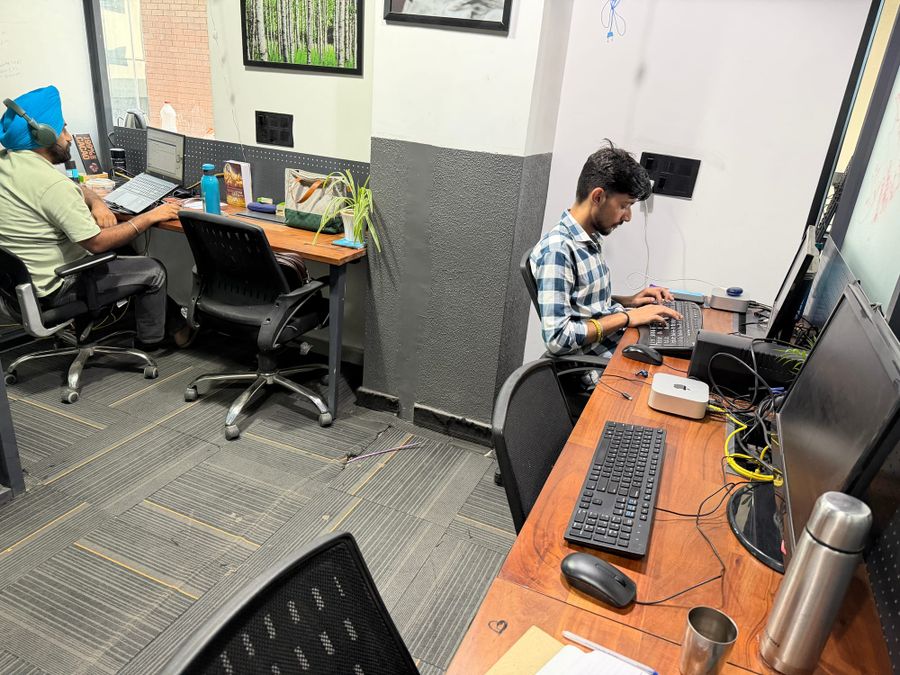
Biggbang also offers private cabins in Mohali for professionals and small teams that need a regular physical workspace.
Why the actual location behind the address matters
A virtual office should not feel like a randomly purchased line of text.
The address may appear on your website, invoices, visiting cards, company records and business correspondence. Clients, vendors or government representatives may search for it or visit it.
A genuine office building with reception, meeting rooms and active businesses creates a stronger impression than an informal address that is difficult to locate.
Location also matters if you later need to meet a client, conduct an interview or upgrade to a physical workspace.
Virtual office in Phase 8A, Sector 75, Mohali
Phase 8A, Sector 75 is an established business and industrial location within Mohali. It is practical for businesses connected with Mohali, Chandigarh and other areas of the Tricity.
A business using an address in an active office location can also benefit from the ability to book meeting rooms or move into physical workspace as the company grows.
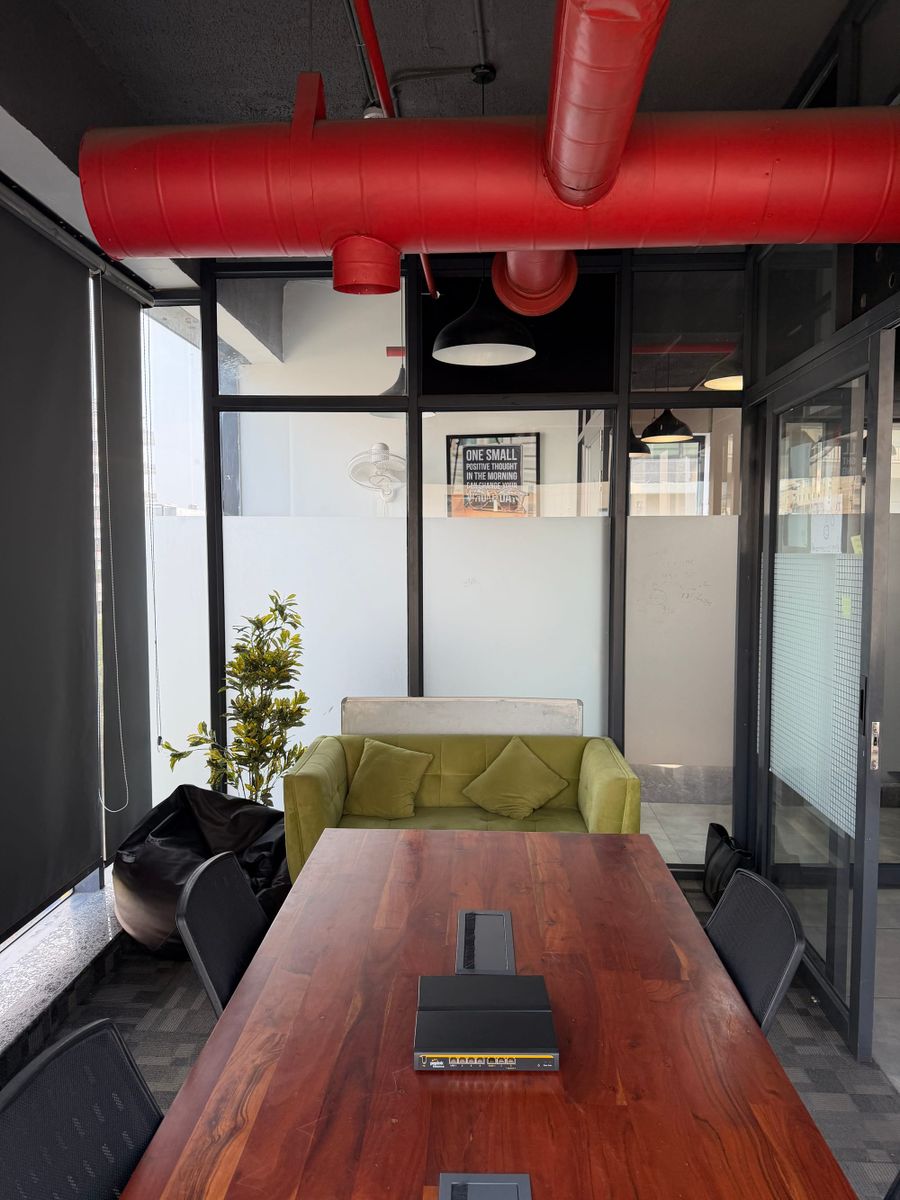
Biggbang offers meeting rooms in Mohali that can be used subject to availability and the selected arrangement.
Why consider Biggbang for a virtual office in Mohali?
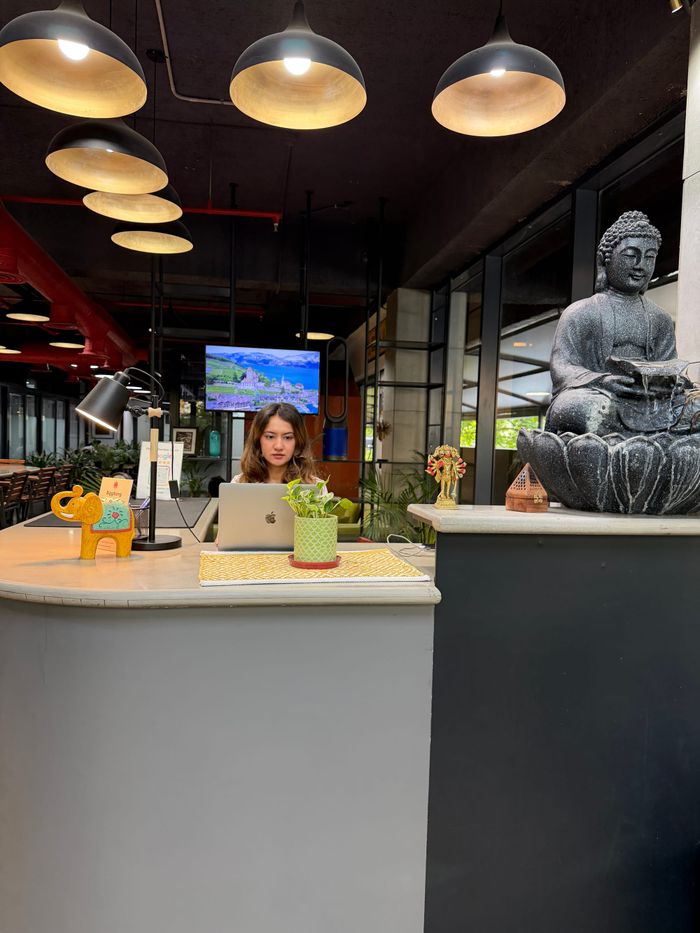
Biggbang’s virtual office in Mohali is connected to an actual coworking and office environment in Phase 8A, Sector 75.
The building includes reception facilities, meeting rooms, coworking seats, private cabins and managed office options.
This gives a business the flexibility to begin with an address-based requirement and move into physical workspace later if its needs change.
The exact documentation and services available depend on the selected plan and the business requirement. Contact the Biggbang team before applying so that your professional advisor can review the proposed document set.

Frequently asked questions
Are shared premises accepted for GST registration?
The GST Portal and CBIC guidance provide document routes for shared premises. The applicant must still submit accurate documents supporting the right to use the address.
Does a virtual office guarantee GST approval?
No. A virtual office provider can supply an address and the services included in the plan, but approval depends on the GST application, documents and verification by the authorities.
Can a GST officer visit the virtual office?
Physical verification may be conducted in certain cases. Businesses should choose a genuine location and ask the provider how verification visits are coordinated.
Can the same address be used by more than one business?
Shared premises are recognised within the GST documentation framework. However, every business must be genuine, separately documented and able to establish its use of the declared location.
Can I use the address for company registration as well?
Some plans support both company registration and GST registration, while others are limited to mail handling. Confirm the permitted use and required documentation before purchasing.
Can I meet clients at the virtual-office location?
This depends on the provider and plan. Biggbang has meeting rooms and physical workspace facilities that may be booked subject to availability and the chosen arrangement.
What happens if I stop using the virtual office?
You should update the registered business address wherever required and ensure that no expired agreement remains connected to your active registrations. Consult your GST professional before discontinuing the address.
Final recommendation
A virtual office can be a practical option for a genuine business that needs a professional GST registration address in Mohali but does not need a complete physical office every day.
The decision should not be based only on price. Check the building, provider, agreement, ownership documents, mail-handling process, verification support and renewal terms.
Most importantly, have your chartered accountant or GST professional review the documents before the application is filed.
A properly documented virtual office can reduce unnecessary office costs. A poorly documented address can create more work than it saves.
Need a virtual office for GST registration in Mohali?
Contact Biggbang to discuss the business address, available documentation, mail handling and optional meeting-room access in Phase 8A, Sector 75.